
Leadership in Complexity: Humility and Hope as Your Hidden Strengths
Oct 22, 2025

In today’s fast-changing and unpredictable world, leaders can no longer achieve results by setting rigid targets and controlling activities. They will only realise their vision through adaptation and collaboration. The environments we lead in are increasingly complex, and complexity demands a different kind of leadership, one rooted in humility and hope.
In my work with leaders across the research sector and public service, I see this need daily. Leaders are navigating shifting priorities, stakeholder tensions, and systems that resist linear solutions. What helps them move forward isn’t more control, it’s clarity, courage, and connection. This article brings together three powerful lenses; Ron Heifetz’s adaptive leadership, Rick Snyder’s Hope Theory, and the Cynefin framework, to explore how leaders can respond to complexity with grounded confidence.
Understanding Complexity: The Cynefin Lens 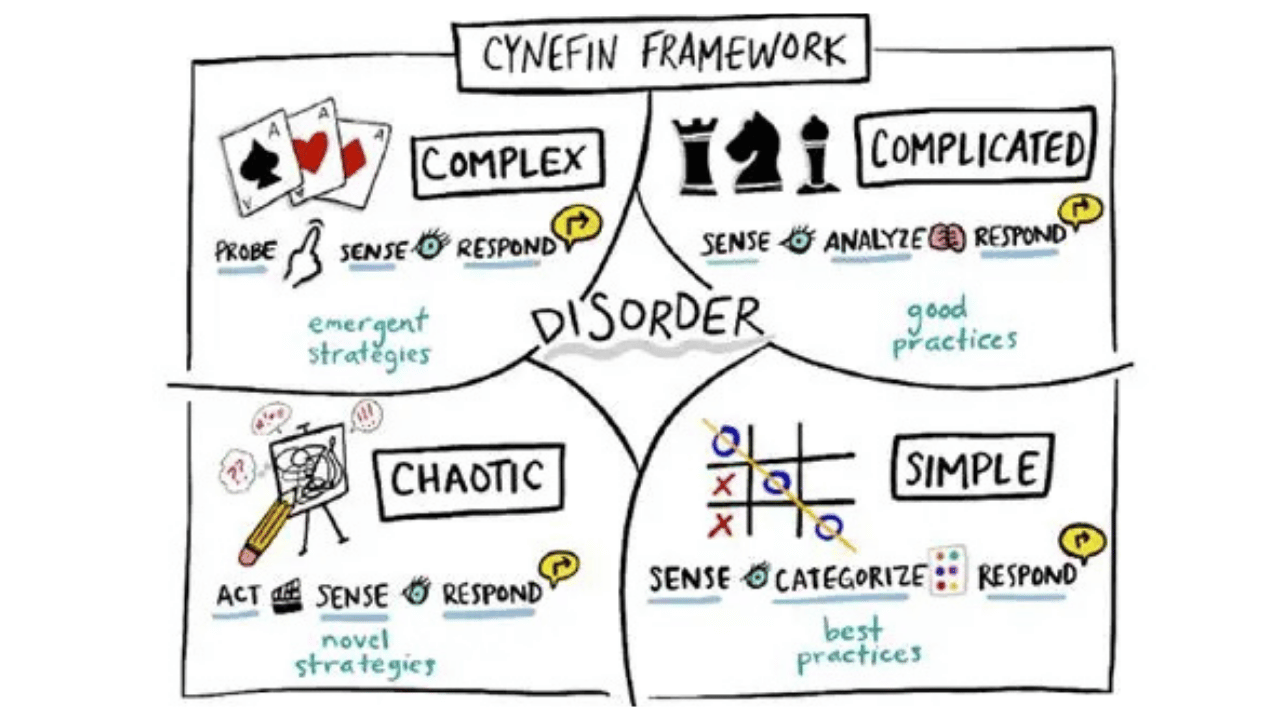
Source: Marton Trencseni, Bytepawn.com
The Cynefin framework, developed by Dave Snowden, helps leaders distinguish between different types of problems: simple, complicated, complex, and chaotic. In complex contexts, cause and effect are only clear in hindsight. There are no best practices, only emergent ones. Leaders must probe, sense, and respond.
This is where adaptive leadership comes in. As Ron Heifetz describes in his work on adaptive leadership, it’s about mobilising people to tackle tough challenges and thrive in changing environments. It requires leaders to step back from being the expert and instead become facilitators of learning and adaptation.
Listening Is Strategic and Shapes the Conversation
In complexity, listening is not a soft skill, it’s a strategic act. It helps leaders sense the system, uncover hidden dynamics, and understand what’s really going on. Listening reveals patterns, pain points, and possibilities.
But listening isn’t just about gathering data. It’s about shaping the system. Drawing on Radical Listening, we know that a leader’s intention and attention when listening profoundly influence what people say and how they interpret what they hear. When leaders listen with genuine curiosity and presence, they create space for dialogue, dissent, and diverse perspectives to uncover the path forward. The quality of their listening creates psychological safety, the foundation for people to speak up, share ideas, and take risks, while it fuels collective sense-making, allowing space for people to process the situation and consider possible ways forward.
Humility: A Superpower in Complexity
In complex environments, no single person can see the whole picture. Leaders who are strongly identified with being ‘the expert’ or ‘the hero’, those who feel they must have all the answers, often struggle in complex environments. Complexity resists certainty. There is no single answer, and no one person can see the whole system.
This challenge calls for humility and a collaborative mindset. Yet many leaders hesitate to embrace humility, fearing it signals weakness or indecision. In reality, humility is a superpower. It allows leaders to say, “I don’t know,” to listen deeply, and to value ideas that aren’t their own. It opens the door to shared learning, experimentation, and collective wisdom.
Humility doesn’t mean hiding your light under a bushel – it means shining it in a way that invites others to shine too. In today’s global and economic context, humility enables leaders to navigate uncertainty with grace and effectiveness. It’s not about being less; it’s about making space for more.
Hope: A Leadership Capability for Complexity
In uncertain times, hope is not naïve optimism, it’s a cognitive and emotional resource that helps people move forward. Rick Snyder’s Hope Theory defines hope as the combination of:
- Goals: Clear, meaningful outcomes we want to achieve.
- Pathways: The ability to generate multiple strategies to reach those goals.
- Agency: The belief in our capacity to act and influence outcomes.
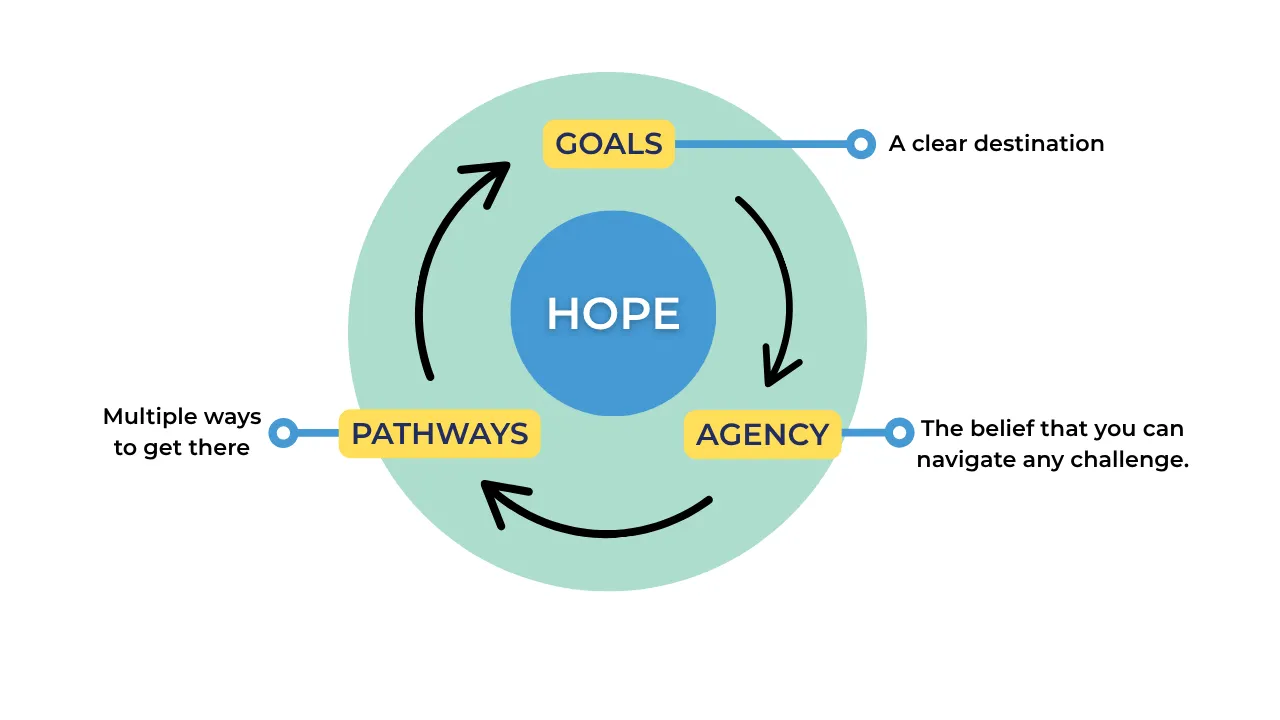
Hope is amplified when people have multiple pathways. When leaders invite teams to explore and share different strategies, even if only one is chosen or tested, it creates a sense of possibility. During times of uncertainty, knowing there are options provides comfort and confidence. It reinforces the idea that progress is possible, even if obstacles are encountered or the route is not yet clear.
When leaders are transparent about the challenges ahead and invite their teams into the process of co-creating goals and pathways, they foster both agency and trust. People don’t need perfect answers, they need to know their voice matters, that they’re not alone, and that there’s room to move forward together.
Practical Habits for Leaders
To lead adaptively in complexity, practice these habits:
- Communicate the vision: Share a compelling and evolving picture of the future to inspire direction and purpose. Be open about what’s known and what is still emerging.
- Listen with intention: Your attention shapes what others say and hear. Listen to understand, not to fix. Ask questions that invite reflection and possibility.
- Model humility: Say “I don’t know” when you don’t. Invite others to contribute ideas. Celebrate solutions that aren’t your own.
- Create space for dissent: Make it safe to challenge assumptions. Encourage diverse perspectives and constructive disagreement.
- Clarify goals collaboratively: Define what success looks like together, even if it’s provisional. Revisit and refine as new insights emerge.
- Explore multiple pathways: Encourage teams to generate and discuss several strategies. Even if one is chosen, knowing others exist builds resilience and hope.
- Build agency: Reinforce people’s strengths, celebrate progress, and share decision-making. Let people feel they can influence outcomes.
- Be transparent: Share what you know, what you don’t, and what you’re learning. Model vulnerability and curiosity.
Conclusion
Leading with Humility and Hope

Leading through complexity is not about having all the answers, it’s about creating the conditions for learning, growth, and resilience. In complex environments, leaders must listen deeply, lead with hope, and embrace humility.
When people feel heard, they feel valued. When they have hope – clear goals, viable pathways, and a sense of agency – they can move forward, even in uncertainty. And when leaders lead with humility, they unlock the collective intelligence of their teams.
So, as you lead through complexity, remember; listening is strategic, humility is powerful, and hope is essential. Together, they enable the kind of leadership our times demand.

Jo Porter, MAPP
Jo Porter, Director of Leading Lighter, has 25 years’ experience as an Organisational & Leadership Development professional. Jo has extensive experience working within the Scientific Research and STEMM Sector, including over 13 years for CSIRO. Jo holds a Master of Applied Positive Psychology from University of Melbourne and leverages evidence-based tools and frameworks in her work.
With years of experience working alongside leaders in technically complex and high-performance environments, Jo has helped organisations move from disengagement and dysfunction to clarity, connection, and momentum. Her approach is grounded in evidence-based methods, practical tools, and a deep understanding of how culture shapes strategy, performance, and wellbeing. The Leading Lighter approach is not that of one-size-fits-all solutions, instead working with leaders and teams to co-create meaningful, sustainable change from the inside out.